Psychological manipulation
Psychological manipulation: the four levers it actually runs on
Psychological manipulation
Key takeaways
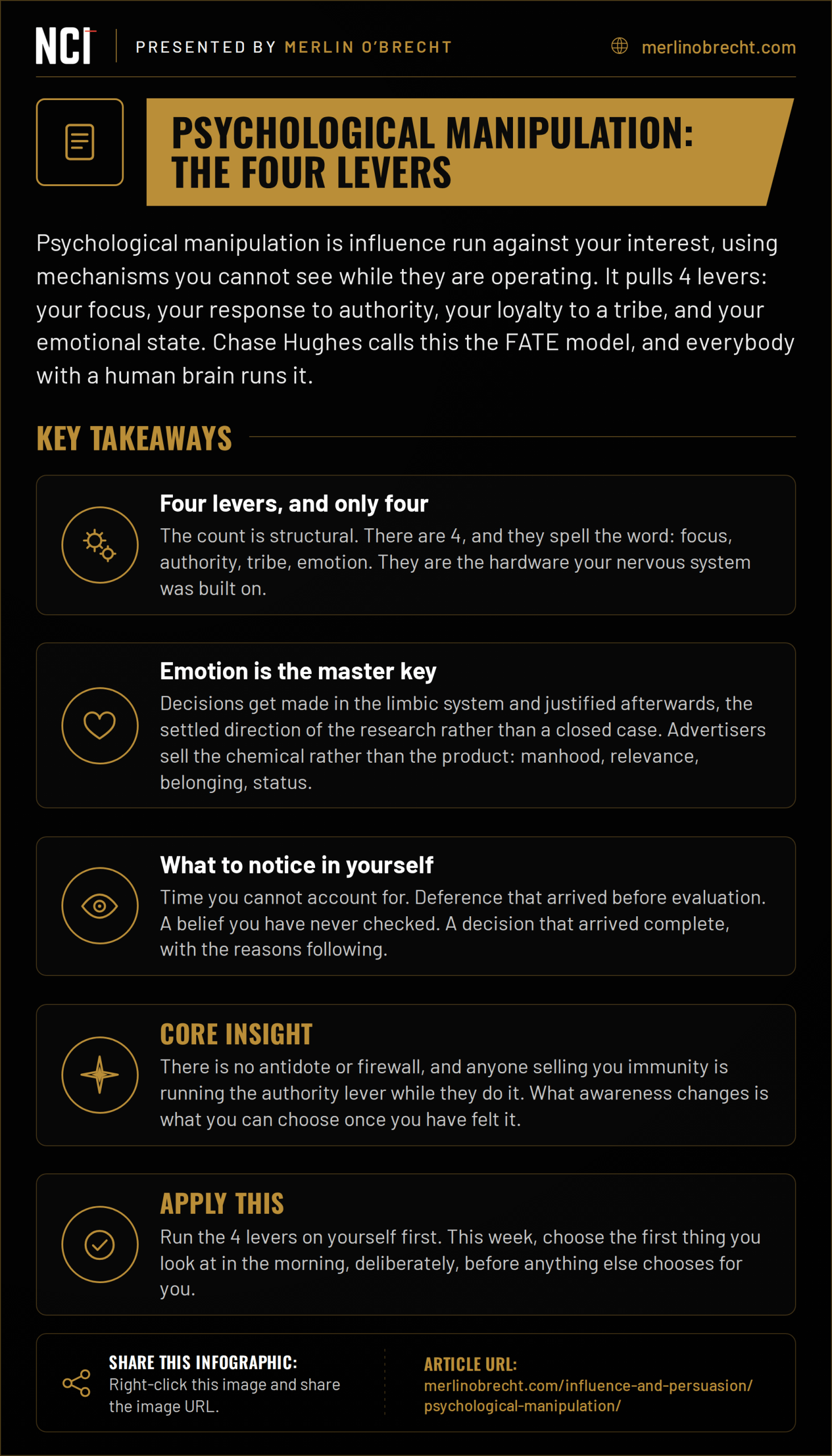
- Manipulation runs on four levers rather than on a personality type: focus, authority, tribe and emotion.
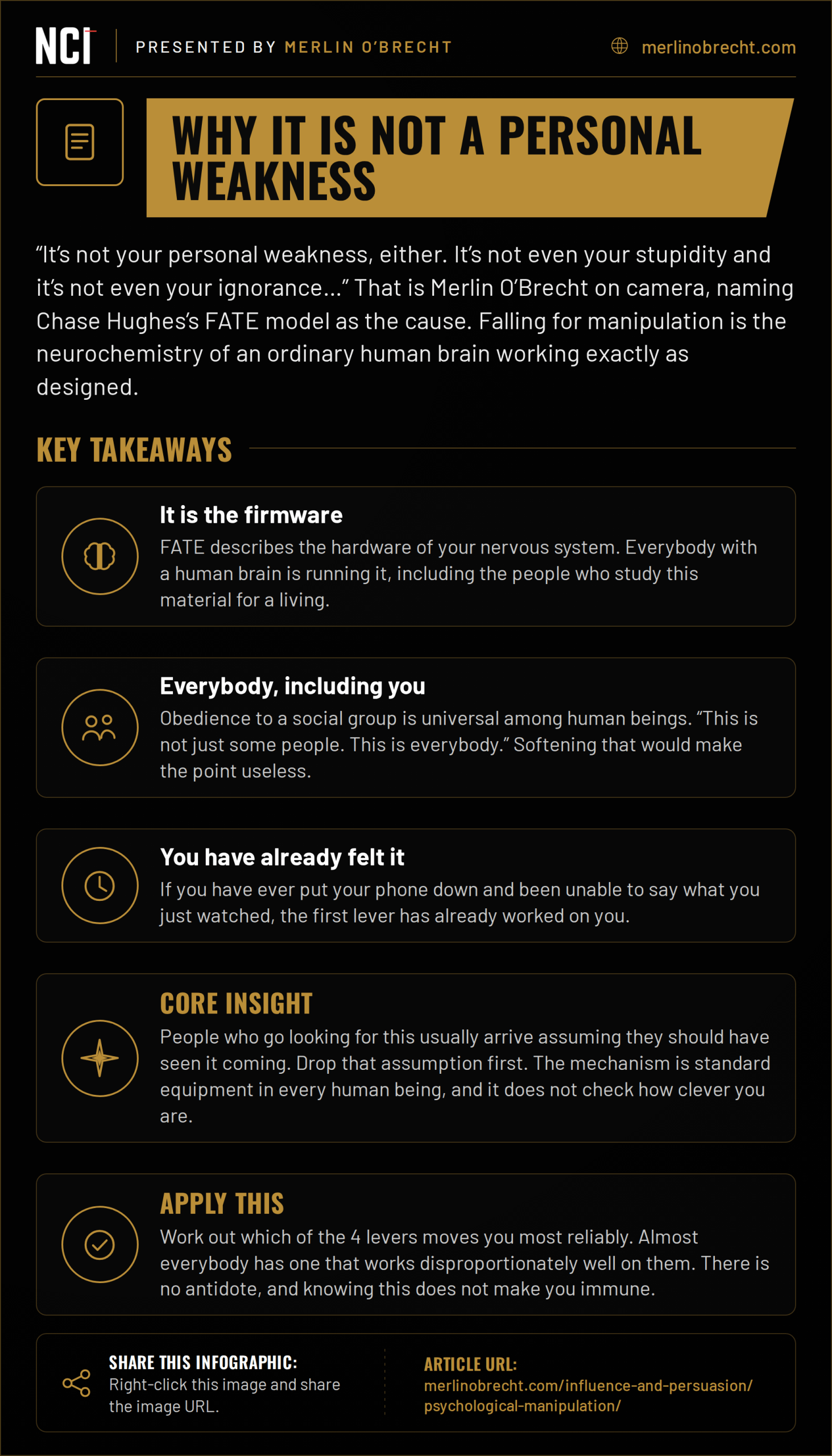
- Falling for it is not weakness, ignorance or stupidity. It is the equipment working as designed.
- Emotion is the master key, because decisions get made in the limbic system and justified afterwards.
- Awareness does not make you immune. It changes what you can choose once you notice.
- The most useful move is running the same four levers on yourself, deliberately, before anyone else does.
What is psychological manipulation?
Why it is not a personal weakness
What are the four levers of the FATE model?
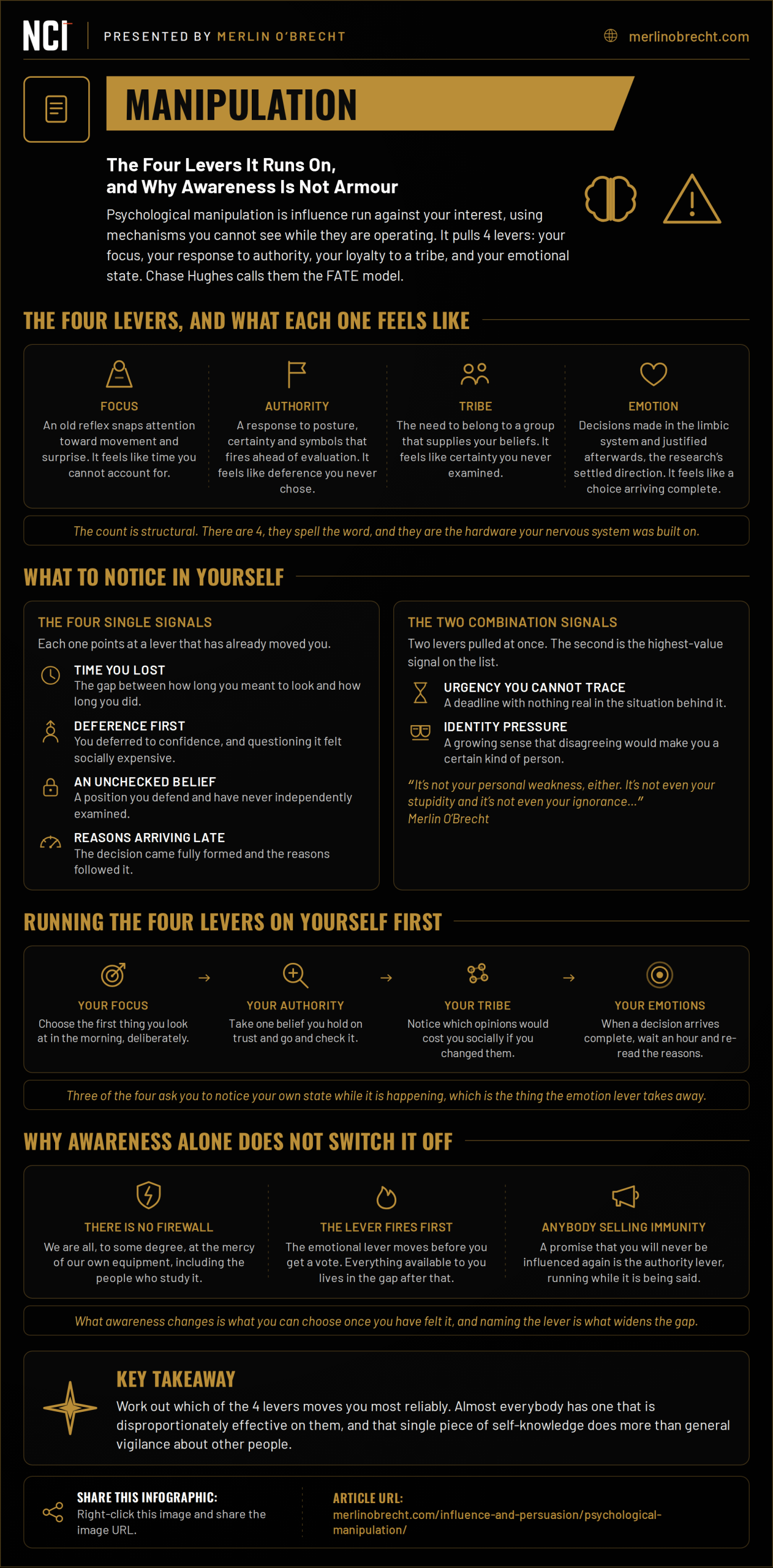
| Lever | What it exploits | What it feels like from the inside |
|---|---|---|
| Focus | An ancestral reflex that snaps your attention toward movement, colour, threat and surprise | Time disappearing. Not being able to recall what you just consumed |
| Authority | A hardwired response to symbols of authority that fires before evaluation does | Deference you did not decide on. Feeling foolish for questioning |
| Tribe | The universal human need to belong to a group that supplies your beliefs | Certainty that arrived without you examining it. Discomfort when the group is criticised |
| Emotion | Decisions being made in the limbic system and justified afterwards by the prefrontal cortex | A choice that feels rational and arrived fully formed |
Focus: how attention gets taken
Think about what actually kept you scrolling this morning. It was not just content, and I would bet it was not even creativity.
Authority: why a symbol works faster than an argument
What to notice in yourself: deference that arrives before you have evaluated anything, particularly toward confidence rather than toward evidence.
Tribe: beliefs you did not choose
Emotion: the master key
How do you tell if the four levers are being used on you?
- Focus: you cannot account for the last 40 minutes, and the thing that took them was not something you chose.
- Authority: you deferred to confidence rather than to evidence, and questioning it felt socially expensive.
- Tribe: you found yourself defending a position you have never independently checked.
- Emotion: the reasons for a decision arrived after the decision did.
- Combination signal: urgency you cannot trace to an actual deadline.
- Combination signal: a growing sense that disagreeing would make you a certain kind of person.
Why awareness alone does not protect you
Running the four levers on yourself first
Build your own focus rather than letting the world scatter it to social media and everything else. One thing this week: choose the first thing you look at in the morning, deliberately, before anything chooses for you.
Choose your own authority rather than outsourcing it to whoever sounds confident or holds a symbol. One thing this week: pick one belief you hold because somebody credible said it, and go and check it yourself.
Build your own tribe deliberately rather than getting swallowed by digital mobs. One thing this week: notice which of your opinions would cost you something socially if you changed them.
Regulate your own emotions rather than letting the world poke and prod and hijack them. One thing this week: when a decision arrives fully formed, wait an hour and see whether the reasons still hold.
Frequently asked questions
Where to go from here